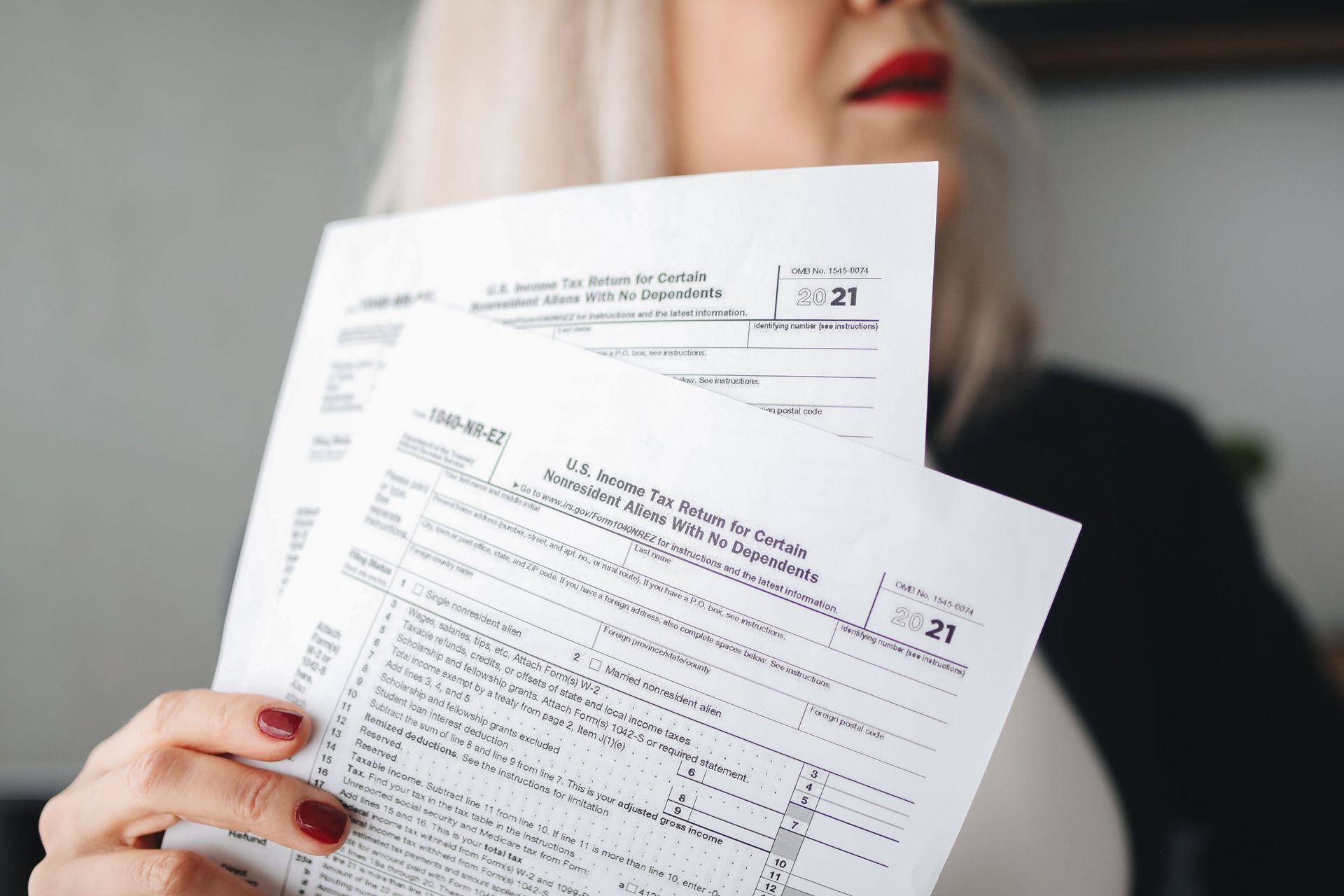
Filed Your Taxes? Here’s How to Lower Your Next Tax Bill Starting Today

You filed your taxes.
You hit submit.
You took a deep breath.
And then came the thought almost every taxpayer has at some point:
“I really don’t want to go through this again next year.”
At Andrea Ward CPA, we hear that constantly after tax season ends.
Not because clients filed incorrectly.
Not because they did something wrong.
But because many people often realize for the first time that taxes are not just about filing paperwork.
They’re about planning.
One thing I often tell clients is:
“Tax preparation records history. Tax planning changes outcomes.”
That mindset shift is where smarter financial decisions begin.
Most Tax Savings Opportunities Happen Before Tax Season
One of the biggest misconceptions people have is assuming April is when taxes are “handled.”
In reality, most meaningful tax-saving opportunities happen throughout the year.
By the time filing season arrives:
- Income has already been earned
- Investments have already been sold
- Expenses have already happened
- Retirement contributions may already be limited
- Business decisions are already finalized
At that point, your return is mostly reporting what has already happened.
That’s why proactive planning matters so much.
I regularly work with clients who say things like:
“I wish I knew this six months ago.”
And honestly, that’s the difference between reactive filing and strategic tax planning.
Your Tax Return Is Trying to Tell You Something
Most people look at a tax return and see numbers.
I look at patterns.
A tax return can reveal:
- Missed deductions
- Inefficient business structures
- Poor estimated tax planning
- Underutilized retirement opportunities
- Unnecessary taxable income
- Bookkeeping problems
- Investment decisions creating avoidable tax exposure
Sometimes a high tax bill isn’t caused by high earnings alone.
Sometimes it’s caused by a lack of strategy.
That’s an important distinction.
Because once you identify the problem areas, you can start improving them before next year arrives.
Business Owners Often Overpay Without Realizing It
This is one of the most common situations I see.
A business owner chooses an entity structure early on, and then never revisits it as the company grows.
But businesses evolve.
Income changes.
Profit margins change.
Goals change.
The structure that made sense years ago may now be creating unnecessary tax liability.
I often encourage business owners to stop thinking of their entity structure as “permanent.”
Instead, it should be viewed strategically.
“Your business setup should support your growth, not quietly work against it.”
That’s a conversation many business owners never realize they need until they’ve already overpaid for years.
Tax Planning Is About More Than Deductions
A lot of people assume tax planning simply means “finding write-offs.”
That’s only a small part of it.
Real tax planning looks at the bigger picture:
- income timing
- retirement contributions
- cash flow
- investments
- entity structure
- estimated taxes
- long-term wealth preservation
At Andrea Ward CPA, our approach connects taxes with overall financial health.
Because taxes influence nearly every financial decision people make.
And when those decisions work together properly, the benefits compound over time.
Retirement Planning Can Lower Taxes Too
This is another area where people leave opportunities on the table.
Retirement planning is not only about preparing for the future. It can also directly impact current tax liability.
The challenge is that there’s no one-size-fits-all solution.
Depending on income and business structure, the right strategy could involve:
- SEP IRAs
- Solo 401(k)s
- Roth contributions
- Traditional retirement accounts
One thing I remind clients frequently is:
“The goal isn’t just saving for retirement. The goal is to do it tax-efficiently.”
That distinction matters more than most people realize.
Small Decisions Create Bigger Financial Consequences
One overlooked investment decision.
One missed deduction.
One poorly timed purchase.
Individually, they may not seem major.
But over time, small financial inefficiencies compound, especially for business owners and higher-income earners.
That’s why I emphasize ongoing conversations rather than a once-a-year panic during filing season.
Good tax planning is rarely about dramatic last-minute moves.
It’s usually about making smarter decisions consistently throughout the year.
The Best Time to Start Planning Is Right Now
Most people wait until tax season to think about taxes.
That’s usually too late.
Right after filing is actually one of the best opportunities to improve next year’s outcome because there’s still time to make meaningful adjustments before year-end.
I often tell clients:
“You don’t lower taxes by hoping next year looks different. You lower taxes by planning differently.”
And that process starts long before the next filing deadline arrives.
If you want next year’s tax season to feel more strategic and less reactive, now is the time to
start planning with Andrea Ward, CPA.

Andrea Ward, CPA
Andrea officially began her accounting career in 1987. But it all began much earlier than that as a kid when she meticulously budgeted her allowance to buy really cool toys. Since then, she has earned Cum Laude honors with a Bachelor in Business Administration, with equivalent minors in Finance and Economics from Texas A&M University. A CPA and Registered Investment Advisor, Andrea loves helping people accumulate wealth.
Popular Posts




Recent Posts