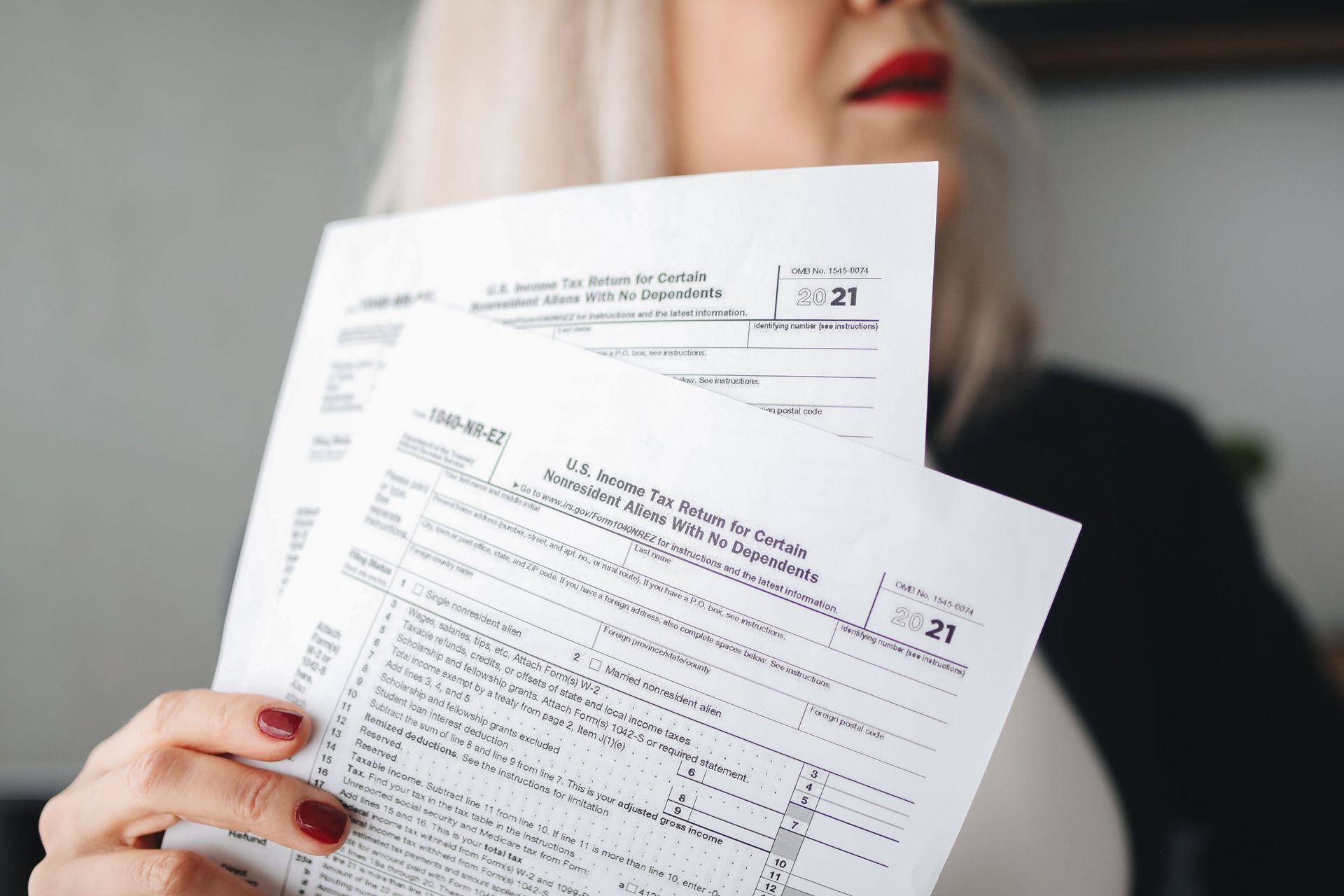
The Tax Mistakes That Quietly Cost You Money Every Year

Most people imagine tax mistakes as something obvious.
A missed deadline. A penalty notice. A letter from the IRS that arrives in a white envelope and immediately raises your blood pressure.
But the tax mistakes that cost people the most money rarely look like that.
They’re quiet.
They’re unremarkable.
And most of the time, they don’t feel like mistakes at all.
In fact, many of them happen to people who are organized, responsible, and doing what they believe is the “right” thing. Returns are filed. Records are kept. Nothing feels out of control.
And yet, year after year, the tax bill remains stubbornly high. Sometimes it creeps up. Sometimes it jumps unexpectedly. Often, it simply never seems to improve — even as income grows and financial life becomes more sophisticated.
At Andrea Ward CPA, this is one of the most common themes we hear:
“I don’t think I’m doing anything wrong… but I also don’t think this is as efficient as it could be.”
That instinct is usually correct.
The Problem Isn’t Big Errors — It’s Small Oversights Repeated Over Time
The tax system isn’t designed to punish people who forget one thing once.
It quietly rewards people who plan consistently — and gently penalizes those who don’t.
What makes tax mistakes so tricky is that many of them don’t create immediate consequences. They simply reduce efficiency. A little more tax paid than necessary this year. A missed opportunity to plan ahead next year. A decision made without seeing how it fits into the bigger picture.
On their own, these moments seem insignificant. Over time, they compound.
And because nothing “breaks,” there’s rarely a reason to stop and reassess.
Treating Taxes as a Filing Task Instead of a Planning Tool
One of the most common patterns we see is this: taxes are treated as something to deal with once a year.
Documents are gathered. Forms are filed. The return is submitted. And then taxes are mentally shelved until the following year.
This approach works fine for basic situations. But as income grows, financial life becomes more layered — and the cost of waiting increases.
Decisions made throughout the year affect taxes far more than anything that happens at filing time. How income is earned. When it’s received. Where it’s invested. Whether certain opportunities are acted on or deferred.
When
tax planning only happens after the fact, many of those decisions are already locked in.
Continuing with Strategies That No Longer Match Your Reality
Another quiet tax mistake is assuming that what worked in the past must still be working now.
Income changes. Businesses evolve. Family dynamics shift. Retirement moves from a distant concept to something more tangible. Yet tax strategies are often left untouched simply because they’re familiar.
There’s comfort in sticking with what’s known. But comfort isn’t always efficient.
A strategy that was perfectly reasonable five or ten years ago may now be misaligned with where you are today. Not wrong — just outdated. And outdated strategies quietly cost money by failing to adapt.
Missing the Connections Between Taxes and the Rest of Your Financial Life
Taxes don’t operate independently, but they’re often treated that way.
It’s common for retirement planning to happen in one conversation, investments in another, estate planning in a third, and taxes somewhere off to the side.
When these areas aren’t coordinated, opportunities are lost in the gaps between them.
For example, an investment decision might make sense on its own, but create unnecessary tax exposure. A retirement contribution might be made without considering long-term tax implications. An estate plan might exist without being aligned with how assets are currently structured.
None of these are “mistakes” in the traditional sense. They’re simply disconnected decisions. And over time, disconnection costs money.
Overlooking Deductions and Credits Because They Require Intention
Many deductions and credits don’t automatically appear. They require awareness, planning, and sometimes a bit of preparation well before tax season.
When life gets busy, it’s easy to focus on what’s urgent and overlook what’s important. Records aren’t gathered with a purpose. Eligibility isn’t revisited. New opportunities introduced by changing circumstances go unnoticed.
This doesn’t mean people aren’t entitled to these benefits — only that they’re not positioned to take advantage of them.
The result isn’t dramatic. It’s quiet. And it repeats.
Life Changes That Shift Taxes Without Much Warning
Major life events often come with obvious emotional impact — but their tax impact is sometimes less visible.
Marriage. Divorce. Starting or selling a business. Approaching retirement. Receiving an inheritance. Even significant changes in income can subtly reshape the tax landscape.
Without guidance, many people continue operating under assumptions that made sense before the change — but no longer fully apply.
These moments are rarely urgent. Which is why they’re easy to postpone. And postponement is where inefficiency settles in.
The Long-Term Effect of “Small” Decisions
Tax planning isn’t about dramatic moves. It’s about cumulative ones.
Choosing one type of account instead of another. Deciding when to recognize income. Delaying a conversation. Repeating the same approach because it feels safe.
Each choice may seem minor in isolation. But when the same small inefficiencies show up year after year, the cost becomes meaningful.
Not because anyone made a bad decision — but because no one stepped back to look at the pattern.
Why These Issues Often Go Unnoticed
What makes these tax mistakes so persistent is that nothing feels broken.
Returns are filed. Payments are made. There are no alarms, no warnings, no immediate consequences.
From the outside, everything looks fine.
And that’s precisely why many people don’t realize how much improvement is possible until someone takes the time to look at the whole picture — calmly, thoughtfully, and without judgment.
How Andrea Ward CPA Helps Bring Things Into Focus
Our role isn’t to tell you that you’ve been doing things wrong.
It’s to help you understand whether what you’re doing is still serving you as well as it could.
We start by listening — not just to the numbers, but to your goals, concerns, and the questions that tend to surface when things slow down. From there, we look at how taxes fit into your broader financial life, and where small adjustments can make a meaningful difference over time.
Clients often tell us the biggest benefit isn’t just tax savings — it’s clarity. Knowing why decisions are being made. Understanding how pieces connect. Feeling confident that nothing important is quietly being overlooked.
A Quiet but Powerful Shift
Tax mistakes don’t always shout. Most of them whisper.
Taking the time to review, realign, and plan isn’t about fixing something broken. It’s about respecting the progress you’ve already made — and ensuring it’s fully supported going forward.
If you’ve ever wondered whether your tax approach could be working harder for you, that curiosity alone is a good place to start.
Sometimes the most impactful changes are the ones that happen quietly — and steadily — over time.

Andrea Ward, CPA
Andrea officially began her accounting career in 1987. But it all began much earlier than that as a kid when she meticulously budgeted her allowance to buy really cool toys. Since then, she has earned Cum Laude honors with a Bachelor in Business Administration, with equivalent minors in Finance and Economics from Texas A&M University. A CPA and Registered Investment Advisor, Andrea loves helping people accumulate wealth.
Popular Posts




Recent Posts