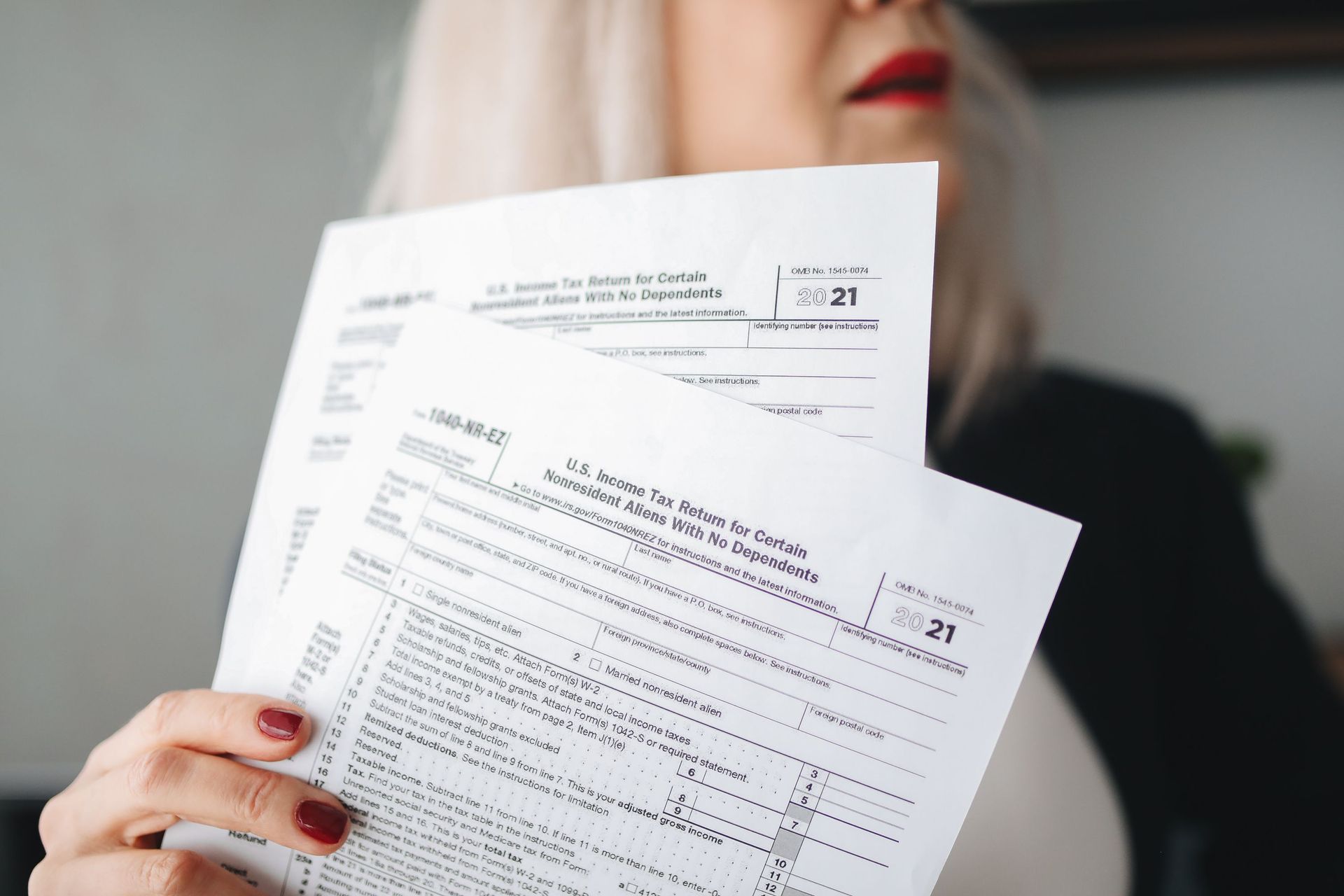
What Business Owners Should Review When Income Is Higher Than Expected

You thought the business would make around $150,000 this year. Instead, you're looking at the numbers, and it could be closer to $225,000.
Maybe a large contract came through. Maybe sales stayed strong longer than expected. Maybe the business simply had its best year yet.
That's good news. But when income moves significantly higher than planned, it's worth stopping to look at what changed and what that means for your taxes.
At
Andrea Ward CPA, this is the point where we encourage business owners to review the numbers before tax season arrives. A higher profit can change your tax liability, estimated payments, deductions, owner compensation, and some of the financial decisions you still have time to make.
Start With Where the Business Is Actually Headed
Don't start with your tax bill. Start with your expected profit.
Look at what the business has earned so far, then consider what's still coming in and going out before the year ends. Are there large invoices outstanding? Major expenses coming up? A busy season ahead?
You don't need to predict the final number perfectly. You need a realistic picture of where the business is likely to finish.
That gives you something useful to work with.
Check Your Estimated Tax Payments
This is one of the first things to review when income jumps.
If your estimated payments were based on a much smaller profit, they may no longer line up with your current situation. The difference can become a large tax payment when the return is prepared, and depending on your circumstances, underpayment penalties may also be an issue.
Pull your profit and loss for the year so far, then check it against the estimated payments you've made. If the second half looks like the first, or better, you may be behind.
A shortfall you catch in October can be fixed with a larger payment in January or a quick change to your fourth-quarter amount. The same shortfall found in April comes with a bill and possibly a penalty.
Take Another Look at Your Expenses
Higher income often means the business has been spending more, too.
New employees. Equipment. Advertising. Software. Professional services. Travel. A larger office or workspace.
Before December, sit down with your bank and credit card statements and compare them to what's in your books. Busy years get messy. Receipts end up stuffed in a truck's glovebox, and a card sits unreconciled for a couple of months.
A vendor payment coded to the wrong account will throw off your numbers, and an expense that never got entered won't be deducted at all. Most of this takes an afternoon and a list of whatever doesn't match.
Review How You're Paying Yourself
A stronger year can also be a reason to revisit owner compensation.
If you run an S corporation, look at how you pay yourself. The split between salary and distributions affects your tax bill, and the right split depends on what the business earns. If your profit has jumped since you last set your salary, that number may be stale.
Bring it up with your CPA before you change anything, and have them check it against your full tax picture, not just the business side.
Look at Purchases You Were Already Planning
A higher tax bill can create the temptation to spend money simply because it's deductible.
That's usually the wrong starting point.
Instead, look at purchases the business actually needs. Were you already planning to replace a vehicle? Upgrade equipment? Add technology? Make another significant investment?
If so, the timing may deserve a conversation.
A tax deduction can reduce taxable income, but it doesn't make an unnecessary purchase profitable. The business decision should come first.
Don't Look at the Business in Isolation
Your business income is only one part of your overall tax picture.
Investment income, your spouse's income, retirement contributions, another business, or other significant financial changes can affect the final result.
That's why looking at a single figure on your profit and loss statement isn't always enough to understand what you will owe.
The more your financial situation changes, the more valuable a complete review becomes.
A Better Year Deserves a Better Review
When income comes in higher than expected, don't wait for the tax return to tell you what it means.
Review where your profit is heading. Check your estimated payments. Go through your expenses. Revisit owner compensation. Look at purchases you were already planning. Then consider the rest of your financial picture.
You may find that you need to make a few adjustments. You may find that you're already in good shape.
Either way, knowing before the year closes gives you something tax season can't: time to make decisions.
If your Fort Worth business is having a stronger year than expected,
Andrea Ward CPA can review your year-to-date numbers with you and help you understand what they could mean for your tax position before the year ends.

Andrea Ward, CPA
Andrea officially began her accounting career in 1987. But it all began much earlier than that as a kid when she meticulously budgeted her allowance to buy really cool toys. Since then, she has earned Cum Laude honors with a Bachelor in Business Administration, with equivalent minors in Finance and Economics from Texas A&M University. A CPA and Registered Investment Advisor, Andrea loves helping people accumulate wealth.
Popular Posts



Recent Posts